La Academia Nacional de Ciencias retira una guía climática "sesgada" utilizada para asesorar a los jueces
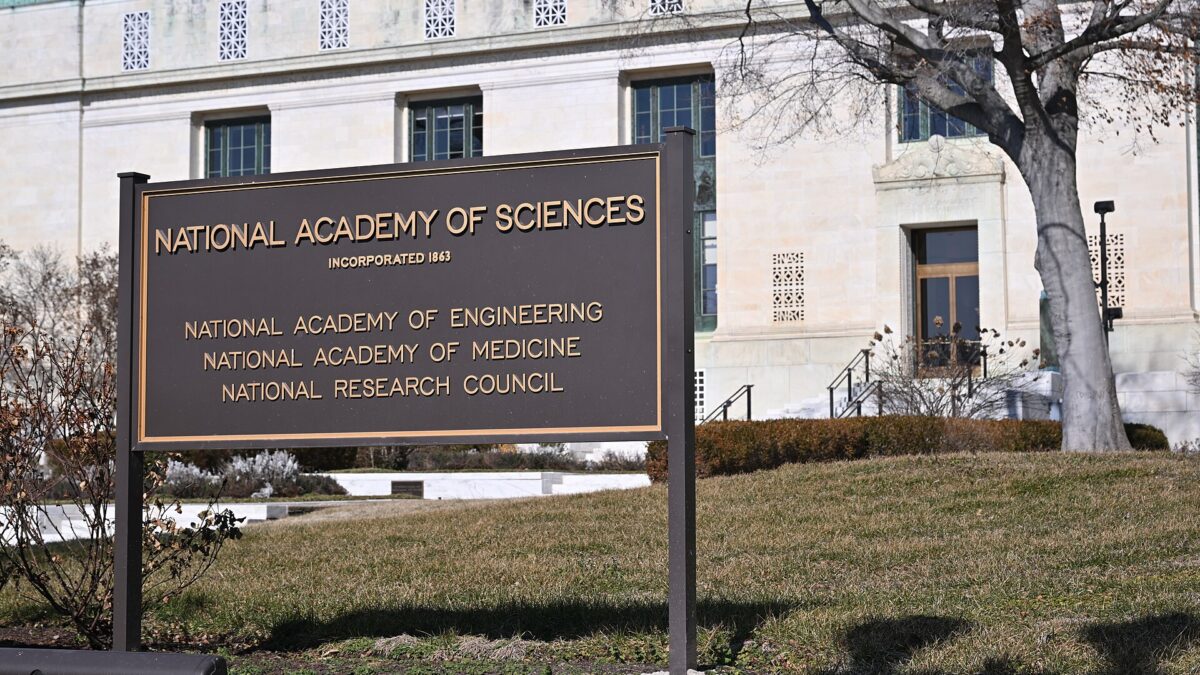
Ilustrativa · NAS-1200x675
Artículo original · The Federalist
Origen del artículo: ArgentinaEsta nota fue traducida del inglés
Resumen objetivo
La Academia Nacional de Ciencias (NAS) retiró el viernes una guía judicial “sesgada” que fue diseñada para influir en los jueces federales en casos relacionados con la llamada “ciencia climática”. En su declaración anunciando que finalmente retiraría la sección sobre el clima, la NAS dijo que “ha determinado que las preguntas sobre los procesos utilizados para desarrollar el capítulo justifican una revisión independiente” y que el capítulo “no aparecerá en nuestro sitio web mientras esa revisión esté en curso”.
Original del medio
Probabilidad de asistencia IA
37%
Moderado
- ·Pocas cifras concretas en un texto largo
- ·Repetición alta de estructuras de palabras
- ·Poca alineación léxica entre titular y cuerpo
Estimación heurística del original del medio (muletillas, variación sintáctica, especificidad). No es prueba forense ni acusa al periodista.
Versión fundamentada
Del medio
The National Academy of Sciences (NAS) retracted a “biased” judicial guide on Friday that was designed to influence federal judges in cases involving so-called “climate science.” The announcement came following The Federalist’s extensive reporting on the subject. “Our core mission is to deploy science in service to the nation while employing procedures that are rigorous, nonpartisan, and that manage potential bias and conflicts of interest. When questions arise whether that standard has been met, we have an obligation to examine them honestly and act on what we find,” the NAS said in a statement. The controversy involves the fourth edition of the Reference Manual on Scientific Evidence, which the National Academies of Science, Engineering, and Medicine (NASEM) produced alongside the taxpayer-funded Federal Judicial Center (FJC). As The Federalist previously reported, the manual is designed to guide and inform federal judges in their assessment of science-related matters in cases that come before the bench. Backlash ensued earlier this year when it was discovered that the manual’s “Reference Guide on Climate Science” contained footnotes and citations to notable left-wing climate activists and advocates. That blowback ultimately prompted the FJC to withdraw the climate section in February. The NASEM, however, continued to post the guide on its website. The Federalist reported in the months that followed on how the climate section’s authors boasted far-left views. The Federalist also revealed how the authors of the manual’s forensics section held similar leftist beliefs and uncovered the influence of the left-wing American Association for the Advancement of Science on the manual. The ensuing controversy prompted President Trump to weigh in on the subject last month. While blasting the “biased” and “fraudulent” manual, the president announced that he had ordered administration officials overseeing federal grants and contracts to “review” the matter. In its statement announcing that it would finally retract the climate section, the NAS said that it “has determined that questions about the processes used to develop the chapter warrant an independent review,” and that the chapter “will not appear on our website while that review is underway.” The organization added that the analysis “is about the process used to produce the chapter and not about the validity of climate science.” The controversy over the FJC-NASEM’s climate guide became a point of discussion during a Senate subcommittee hearing last month featuring Supreme Court Justices Amy Coney Barrett and Elena Kagan, who authored the foreword to the manual. While telling Sen. Susan Collins, R-Maine, that she had “become aware” of the scandal, Kagan claimed that she “hadn’t read” the contested chapter prior to authoring the foreword, and that she “still” had not read it at that time. Numerous conservative legal groups have urged the Senate Judiciary Committee to investigate Kagan for what they allege is a failure to recuse herself from an upcoming Supreme Court case involving “a challenge to a Colorado state tort judgment against oil and gas companies for their alleged contributions to climate change.” The groups argued that Kagan’s authorship of the manual foreword represents a conflict of interest in the matter. It took them long enough. After eight months, the National Academies has finally acknowledged that the biased climate science chapter is a major problem and deserves more
Sesgo en esta pieza
Framing partidario
Etiquetas de bando («la casta», «los K», «woke», «the regime») o preguntas retóricas que meten el hecho en un relato político previo.
Qué significa nivel 2/5
Moderada: hay un empujón retórico o un hueco, pero el hecho sigue claro.
Frase del original
«far-left»
Por qué se marcó en esta pieza
Señal de framing partidario en el cuerpo: aparece «far-left». Marco de bando o etiqueta tribal: organiza el hecho dentro de un relato político previo. Fragmento: «…owed on how the climate section’s authors boasted far-left views. The Federalist also revealed how the authors of the…». (Nivel 2/5 — solo esta pieza, no el medio entero.)
No mide la objetividad del medio completo: solo señales en el texto de esta noticia.
Debate
Entrá para comentar. Podés leer todo sin cuenta.
- Todavía no hay comentarios.