Juez aprueba esfuerzo de Trump para poner fin a las protecciones del TPS en Sudán del Sur
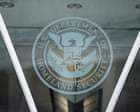
Ilustrativa · 3333
Artículo original · The Guardian
Origen del artículo: Reino UnidoEsta nota fue traducida del inglés
Resumen objetivo
El viernes, la jueza de distrito estadounidense Patti Saris del distrito de Massachusetts rechazó un intento de organizaciones de derechos de los inmigrantes, incluida African Communities Together, con sede en Nueva York, de mantener el TPS para los nacionales de Sudán del Sur que viven en Estados Unidos.
Original del medio
Probabilidad de asistencia IA
30%
Bajo
- ·Repetición alta de estructuras de palabras
- ·Poca alineación léxica entre titular y cuerpo
Estimación heurística del original del medio (muletillas, variación sintáctica, especificidad). No es prueba forense ni acusa al periodista.
Versión fundamentada
Del medio
The Department of Homeland Security (DHS) headquarters in Washington. Photograph: Bloomberg/Getty Images View image in fullscreen The Department of Homeland Security (DHS) headquarters in Washington. Photograph: Bloomberg/Getty Images Judge approves Trump effort to end South Sudan TPS protections Decision follows supreme court ruling that allowed US government to strip protections for Haitians and Syrians Temporary protected status (TPS) for hundreds of South Sudanese nationals in the United States is set to end after a federal judge ruled that the Trump administration can move forward with stripping their protections. On Friday, US district judge Patti Saris of the district of Massachusetts rejected an attempt by immigrant rights organizations including the New York-based African Communities Together to keep TPS for South Sudanese nationals living in the US. Saris’s decision follows a 6-3 supreme court ruling in June allowing the Trump administration to strip hundreds of thousands of Haitians and Syrians of TPS, which granted them permission to work and live legally in the US. The supreme court’s conservative majority overturned lower court rulings in New York and Washington DC, which had blocked the administration from ending TPS for more than 350,000 Haitians and about 6,100 Syrians. A TPS designation allows eligible people from certain countries facing crises including civil war and environmental disasters to remain in the US temporarily, protects them from deportation and allows them to work legally. In her 15-page ruling, Saris wrote that “as a logical matter, plaintiffs’ arguments rest upon a self-contradictory, self-defeating foundation”. According to Saris, the plaintiffs’ argument undermined itself, because if the homeland security department (DHS) lacked the authority to terminate South Sudan’s TPS designation, it also would have lacked the authority to issue the designation initially. “South Sudan’s original TPS designation would thus be invalid by the same token as its termination,” Saris wrote. In response to the ruling, James Percival, a DHS general counsel said on X: “Every other TPS judge must do the same! Every day these ‘administrative stays’ are in effect is a day the American people are denied what they voted for.” The Guardian has contacted African Communities Together for comment. Meanwhile, in a statement on Friday, the immigrant advocacy organization Global Refuge condemned the ruling. The CEO, Krish O’Mara Vignarajah, said: “The reality of the situation is that South Sudan is on the brink of a return to an all-out-civil war. Roughly two-thirds of the population, some 10 million people, now depend on humanitarian aid to survive. “With only several hundred South Sudanese holding TPS in the US right now, this isn’t a policy forced by scale or strain on our system. To the contrary, this is the administration’s deliberate choice to send a small group of vulnerable individuals and families back into a country where civilians are bearing the brunt of intensifying violence and displacement,” Vignarajah added. The Trump administration’s effort to strip TPS protections from hundreds of thousands of immigrants comes despite the US government’s own highest-level travel warnings for Americans to several countries affected, including South Sudan, Haiti and Syria. In the case of South Sudan, the country has been ravaged by years of civil war and political instability that have displaced millions. Since gaining i
Sesgo en esta pieza
Sin señales detectadas según la metodología.
Debate
Entrá para comentar. Podés leer todo sin cuenta.
- Todavía no hay comentarios.