'Hemos estado muy cerca': los evacuados por incendios forestales en Canadá se preguntan si todavía tienen…
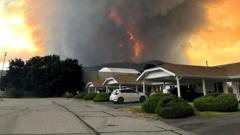
Ilustrativa · ef6387f0-94f2-11f1-b2ab-0dd01740f9f6
Artículo original · BBC World (EN)
Origen del artículo: Reino UnidoEsta nota fue traducida del inglés
Resumen objetivo
En los últimos 10, dijo que se había acostumbrado a los incendios forestales que amenazaban a su comunidad. Una mujer, de 80 años, murió mientras intentaba huir del incendio forestal, dijo la policía el domingo. Algunos residentes de la comunidad agrícola se vieron obligados a dejar su ganado en la rápida evacuación, dijo Kaz Nowlin, quien ha estado ayudando a rescatar animales varados en el área de Okanagan desde que estallaron los incendios forestales el mes pasado. "Hemos tenido muchos momentos difíciles antes, pero nunca había sido así",
Original del medio
Probabilidad de asistencia IA
21%
Bajo
- ·Repetición alta de estructuras de palabras
- ·Poca alineación léxica entre titular y cuerpo
Estimación heurística del original del medio (muletillas, variación sintáctica, especificidad). No es prueba forense ni acusa al periodista.
Versión fundamentada
Del medio
"That fire came so fast": Wildfire rages in British Columbia Earl Kurz and his wife have lived in Peachland, a town overlooking Okanagan Lake in Canada's British Columbia, for 30 years. In the last 10, he said he has grown used to wildfires threatening his community. But this is the first time he's been forced to flee, and surveying the damage left behind by the Bald Range wildfire, which broke out on Friday and grew in a matter of hours to 53 sq miles (136 sq km) in size, has been difficult. "It's total incinerated destruction, " Kurz said. "The hot spots are just barren areas of nothing except 12 inches of ash. " Officials in British Columbia are still trying to determine how many homes were lost to the fire, which remains out of control as of Monday. 'Not afraid to stay': The Canadians who want to change how wildfires are fought Residents warned to brace for the worst as Canada wildfire rages out of control More than 12,000 residents in the area are still under an evacuation order. One woman, aged 80, died while trying to flee from the wildfire, police said on Sunday. With dry lightning, high temperatures and winds in the forecast, officials warned on Monday that the fire continues to be a threat and that new ignitions are possible. The Okanagan area of British Columbia, known for its world renowned vineyards and picturesque scenery, has been grappling with extreme drought in recent years. As of July, the level of the Okanagan Lake was at its lowest since 1992, according to the Okanagan Basin Water Board. The Bald Range wildfire is one of more than 100 burning in British Columbia as of Monday - 70 of which started in the last week alone. The west coast province's premier, David Eby, declared a state of emergency over the weekend, urging residents to heed evacuation orders and warning that the fires continue to move "incredibly quickly". Keegan Radomski is one of thousands who have had to flee their homes in Summerland, a town on the Okanagan Lake just south of Peachland. The 18-year-old told the BBC she barely escaped with her mother's ashes before she saw the fire breach her property. "We've had a lot of close calls before, but it's never been like this, " Radomski said. "You always think it's not going to be you, and then it's you. " The home she fled was built by her grandmother 30 years ago, she said. Living in the Okanagan for decades meant that Radomski and her family are familiar with wildfires and evacuation notices, but they were still caught off guard by the speed of this fire. The family noticed wildfire smoke from the distance while eating dinner on Friday evening. Less than four hours later, Radomski said she was scrambling to get everyone out as she saw a hill on her property begin to burn. She added she is still unsure if her family's home survived, and when she can return and check for herself. Doug Holmes, the mayor of Summerland, told CBC News on Monday that some people's homes have been lost, but "we don't know how many". "I think we need to prepare for the fact that everybody is going to know somebody that has lost a home, " Holmes said. Some residents in the farming community were forced to leave their livestock behind in the quick evacuation, said Kaz Nowlin, who has been helping rescue stranded animals in the Okanagan area since wildfires broke out last month. Nowlin said he and a group of volunteers have so far rescued dozens of animals, including 57 horses. He told the BBC he is in the p
Sesgo en esta pieza
Generalización
Frases absolutas («todos», «nadie», «la gente», «everyone») que tratan un caso como si fuera la regla universal.
Qué significa nivel 1/5
Leve: un matiz discutible; no cambia la lectura del hecho.
Frase del original
«never»
Por qué se marcó en esta pieza
Señal de generalización en el cuerpo: aparece «never». Generalización absoluta sin matiz ni dato: presenta un caso como si fuera la regla universal. Fragmento: «…"We've had a lot of close calls before, but it's never been like this, " Radomski said. "You always think it's not…». (Nivel 1/5 — solo esta pieza, no el medio entero.)
No mide la objetividad del medio completo: solo señales en el texto de esta noticia.
Debate
Entrá para comentar. Podés leer todo sin cuenta.
- Todavía no hay comentarios.