"Empujé el tubo con tanta fuerza que me desgarró la nariz": un cineasta kurdo relata la "inhumana"…
Ilustrativa · 5001
Artículo original · The Guardian
Origen del artículo: Reino UnidoEsta nota fue traducida del inglés
Resumen objetivo
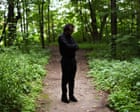
Allí, los guardias inmovilizaron a Choli en una cama mientras el personal médico le insertaba por la fuerza un tubo de alimentación a través de la nariz y la garganta, y le bombeaba líquido nutritivo al estómago. El cineasta y activista por un Kurdistán independiente habló por primera vez en exclusiva con The Guardian la semana pasada desde Canadá sobre la terrible experiencia en Estados Unidos que, según dijo, “lo rompió”. El cineasta kurdo Gabar Choli fotografiado en London, Ontario.
Original del medio
Probabilidad de asistencia IA
24%
Bajo
- ·Repetición alta de estructuras de palabras
- ·Poca alineación léxica entre titular y cuerpo
Estimación heurística del original del medio (muletillas, variación sintáctica, especificidad). No es prueba forense ni acusa al periodista.
Versión fundamentada
Del medio
Kurdish film-maker Gabar Choli pictured in London, Ontario. Photograph: Cole Burston/The Guardian View image in fullscreen Kurdish film-maker Gabar Choli pictured in London, Ontario. Photograph: Cole Burston/The Guardian ‘Shoved the tube so hard it tore my nose’: Kurdish film-maker recounts ‘inhumane’ ICE force-feeding Gabar Choli tells of how, for months, he was shackled, pinned and forcibly fed – and the physical and emotional scars the ordeal has left In June 2025, a sluggish and thin Gabar Choli, with sunken temples and bones visible under his skin, braced himself for the immigration detention center guards to charge into his cell once again. Choli was in a solitary confinement medical cell inside the Port Isabel service processing center, an Immigration and Customs Enforcement ( ICE ) detention facility in south Texas where immigrants arrested in Donald Trump’s anti-immigration crackdown are detained. Choli, a 40-year-old Kurdish asylum seeker with a thick beard and long dark hair, had been on hunger strike for over two months, demanding improved conditions for detained immigrants and to be released or deported. That day in June 2025, Choli’s nose was swollen, his throat hurt and he could still taste blood from previous days of treatment for which he never gave his consent, he said. The film-maker and activist for an independent Kurdistan has spoken out for the first time, talking exclusively to the Guardian last week from Canada about the ordeal in the United States that he said “broke him”. He recounted the vile routine as the detention center guards would rush towards him and wrestle him to the concrete cell floor, shackle his wrists and ankles, and drag him to the detention center infirmary. There, the guards pinned Choli on a bed while medical staff forcibly inserted a feeding tube through his nose and down his throat, and pumped nutritional liquid into his stomach. Choli was being force-fed by ICE. “Two guards would hold my feet; two hold my hands; one hold my head – and they would shove tubes in my nose,” Choli said. “It’s not easy to be wrestled to the ground twice a day by men that are stronger than you. And you just take it. You have 60cm of tube going through you and you just feel every centimeter of it.” An investigation by the Guardian, based on dozens of pages of court records and interviews with medical and legal experts, found that Choli was quietly and intermittently force-fed by ICE for nearly eight months – from late May 2025 until he was deported in January. He was not alone – he even met a fellow hunger striker, an Afghan man the Guardian also learned about, as they were both forcibly fed in the same ICE facility. Force-feeding is an excruciating and traumatizing process that has been widely condemned by human rights organizations as torture. For Choli and others, refusing food is a last resort to protest against harsh conditions and lack of progress in their immigration cases, but sometimes brings only harsher conditions. “I understood the necessity of making a stand for what was right,” Choli said, speaking by phone with the Guardian, talking in a very matter-of-fact way about his recent experience. At various times, Choli would sarcastically chuckle, almost incredulous now when remembering the officials’ actions. “I was respectful. I just told them I am protesting for humane treatment, nothing else. But they were determined to break me,” he said. Choli suffered swollen sinuses, a damaged esophagus
Sesgo en esta pieza
Generalización
Frases absolutas («todos», «nadie», «la gente», «everyone») que tratan un caso como si fuera la regla universal.
Qué significa nivel 1/5
Leve: un matiz discutible; no cambia la lectura del hecho.
Frase del original
«never»
Por qué se marcó en esta pieza
Señal de generalización en el cuerpo: aparece «never». Generalización absoluta sin matiz ni dato: presenta un caso como si fuera la regla universal. Fragmento: «…lood from previous days of treatment for which he never gave his consent, he said. The film-maker and activist for…». (Nivel 1/5 — solo esta pieza, no el medio entero.)
No mide la objetividad del medio completo: solo señales en el texto de esta noticia.
Debate
Entrá para comentar. Podés leer todo sin cuenta.
- Todavía no hay comentarios.