El virus del Ébola detrás de un brote masivo en la República Democrática del Congo podría estar mutando…
Ilustrativa · 2855
Artículo original · The Guardian
Origen del artículo: Reino UnidoEsta nota fue traducida del inglés
Resumen objetivo
El virus que causó un brote masivo de Ébola en la República Democrática del Congo podría estar mutando, temen los funcionarios de salud, ya que los casos confirmados superan los 4.000. El brote de Ébola, causado por la cepa Bundibugyo del virus, se informó por primera vez el 15 de mayo, aunque existen sospechas de que la enfermedad podría haberse estado propagando desde enero.
Original del medio
Probabilidad de asistencia IA
22%
Bajo
- ·Poca alineación léxica entre titular y cuerpo
Estimación heurística del original del medio (muletillas, variación sintáctica, especificidad). No es prueba forense ni acusa al periodista.
Versión fundamentada
Del medio
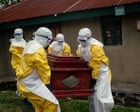
Members of a Congolese Red Cross team with the coffin of a woman suspected of having died from Ebola virus in Bunia last June. Photograph: Jospin Mwisha/AFP/Getty Images View image in fullscreen Members of a Congolese Red Cross team with the coffin of a woman suspected of having died from Ebola virus in Bunia last June. Photograph: Jospin Mwisha/AFP/Getty Images Ebola virus behind massive outbreak in DRC could be mutating, officials say Cases have passed 4,000 and health watchdog plans to go door to door to find patients in major response escalation The virus causing a massive outbreak of Ebola in the Democratic Republic of the Congo could be mutating, health officials fear, as confirmed cases pass 4,000. Africa’s public health watchdog said the time for incremental action was over as they announced plans to scale up every aspect of the response and go “door to door” looking for patients. The Ebola outbreak, caused by the Bundibugyo strain of the virus, was first reported on 15 May, although there are suspicions the disease could have been spreading since January. There have been 3,973 cases and 1,801 deaths recorded as of 4 August, according to the DRC’s national public health institute. Speaking on Thursday, Dr Jean Kaseya, director general of the Africa Centres for Disease Control and Prevention (Africa CDC), told a press briefing cases had topped 4,000. The outbreak is now the second-largest Ebola outbreak on record. There are eight times more cases, and six times more deaths than were recorded 11 weeks into the West Africa Ebola outbreak in 2014-18, which infected more than 28,000 people and killed at least 11,000. Kaseya said he had spoken to the director general of the World Health Organization, Dr Tedros Adhanom Ghebreyesus, and they planned studies “to check if there is no additional issue, or maybe if the virus is not mutating. Because the level of severity of this Bundibugyo outbreak is unprecedented.” More than two-thirds of Ebola deaths are happening in the community rather than in treatment centres. In a treatment centre run by MSF in Bunia, the capital of Ituri province, 90% of admitted patients do not appear on authorities’ lists of contacts of known cases. Both factors indicate high levels of untracked transmission. Kaseya said contact tracing in the DRC was insufficient, with only 10 contacts identified for every Ebola patient, when about 40 would be the expected number. Ebola is a viral haemorrhagic fever that can cause vomiting, diarrhoea, organ damage and internal bleeding. The outbreak is centred on the conflict-affected mining province of Ituri, but has spread to Nord-Kivu, Sud-Kivu, Haut-Uele and Tshopo. There were 20 cases recorded in neighbouring Uganda before it brought its outbreak under control. Dr Wessam Mankoula, acting head of emergency preparedness and response at Africa CDC, said response teams planned a shift “from contact tracing to active case search”, which would mean community health workers “moving from door to door” asking households if they had anyone sick with Ebola symptoms. He added: “I think the time for incremental action is over and we’re starting now the phase for scaling up.” Kaseya promised a “village-centered response” that would involve communities, more use of digital tools and greater action in the camps for people who have been internally displaced by conflict in affected provinces. Officials also said they planned to begin using antiviral remdesivir on a compassionate
Sesgo en esta pieza
Lenguaje cargado
Adjetivos o fórmulas de impacto que empujan una emoción sin sumar un hecho (ej. «escandaloso», «IMPACTANTE», «slammed»). No se marcan palabras literales de un desastre o crimen real (ej. «catástrofe» en un terremoto).
Qué significa nivel 1/5
Leve: un matiz discutible; no cambia la lectura del hecho.
Frase del original
«viral»
Por qué se marcó en esta pieza
Señal de lenguaje cargado en el cuerpo: aparece «viral». Empaque de clickbait visual: prioriza el gancho multimedia sobre la información. Fragmento: «…bout 40 would be the expected number. Ebola is a viral haemorrhagic fever that can cause vomiting». (Nivel 1/5 — solo esta pieza, no el medio entero.)
No mide la objetividad del medio completo: solo señales en el texto de esta noticia.
Debate
Entrá para comentar. Podés leer todo sin cuenta.
- Todavía no hay comentarios.