El año escolar comienza en Los Ángeles con un gran cambio: tiempo limitado frente a la pantalla
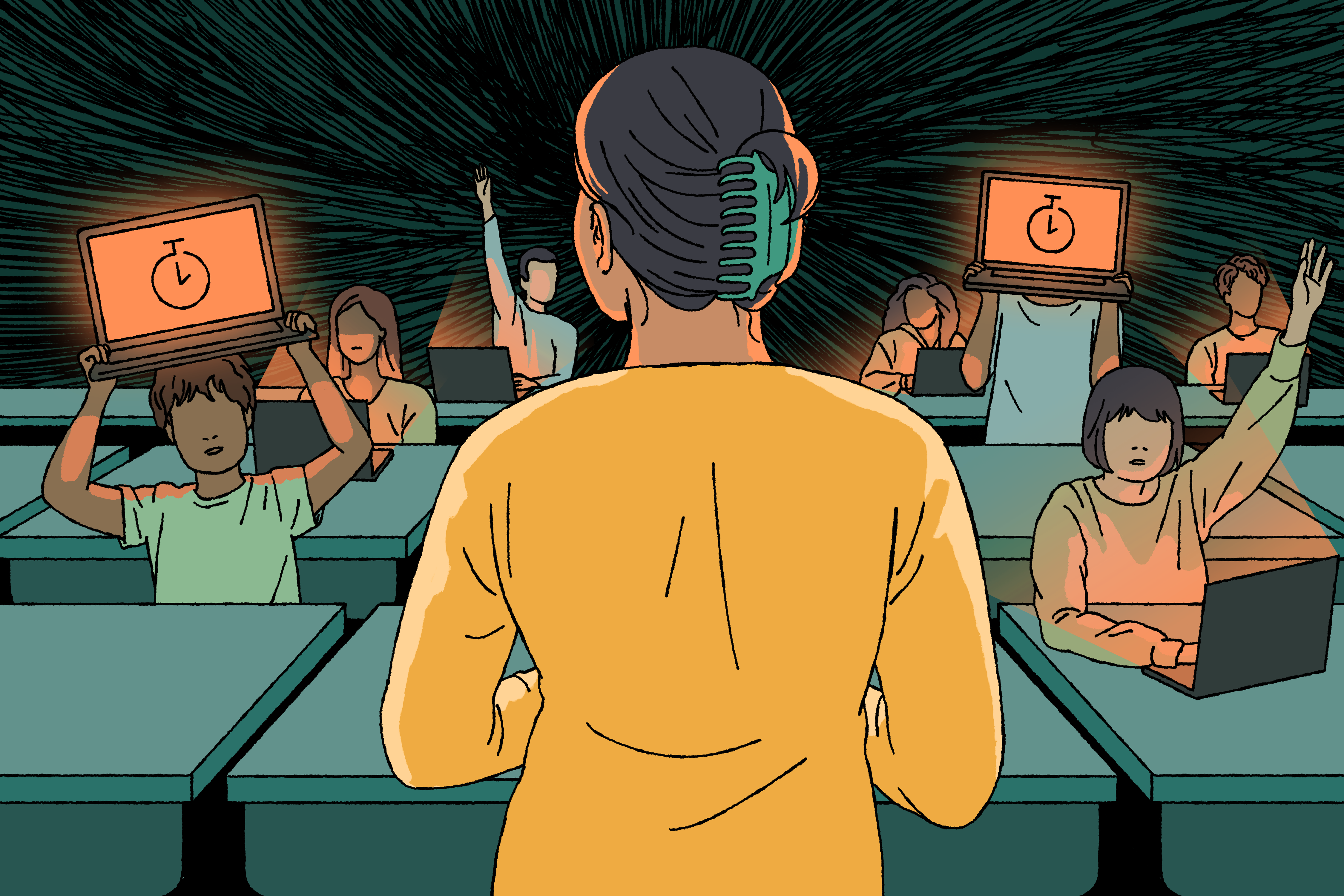
Ilustrativa · El año escolar comienza
Origen del artículo: Estados UnidosEsta nota fue traducida del inglés
Resumen objetivo
Este año trae un nuevo desafío para Armaghan Khan y muchos otros maestros en el segundo distrito escolar más grande del país: prohibir el tiempo de pantalla para los estudiantes más jóvenes y limitarlo significativamente para los niños mayores. La junta escolar aprobó la resolución esta primavera: a partir de esta semana, el primer grado y menores no tendrán ningún tiempo frente a la pantalla, en noviembre, el resto de las clases de la escuela primaria tendrán límites, y los estudiantes de secundaria y preparatoria lo seguirán más adelante en el año.
Original del medio
Probabilidad de asistencia IA
21%
Bajo
- ·Repetición alta de estructuras de palabras
- ·Poca alineación léxica entre titular y cuerpo
Estimación heurística del original del medio (muletillas, variación sintáctica, especificidad). No es prueba forense ni acusa al periodista.
Versión fundamentada
Del medio
Charlotte Gomez for NPR Catch up on what you missed with our Education This year brings a new challenge for Armaghan Khan and many other teachers in the nation's second-largest school district: Ban screen time for younger students, and significantly limit it for older kids. "This is going to be a big impact for me, " says Khan, who's spent his career in the Los Angeles Unified School District. "I would say about 75% of our work was on some kind of screen-based activity. " As a science teacher Khan, has embraced technology. Not only because his students at Johnnie L. Cochran Middle School can perform large-scale experiments on their laptops — like a car crash simulator to understand things like Newtonian forces — but also because it's his best option. Education We asked a first grader to interview his hero: A bird scientist "My hands are kind of tied in terms of just what I can offer, " he says. "We have a lab space, but we do not have a lab budget. " Many districts and a growing number of states have passed similar limits this year, but the rapid roll out in Los Angeles for teachers and the district's more than 400,000 students is unique. The school board passed the resolution this spring: Starting this week, 1st grade and under will have no screen time at all, in November, the rest of elementary school classes will have limits, with middle and high school students following later in the year. The new rules are a departure for LAUSD, which only a few years ago was a national leader in bringing technology into the classroom. Khan said he was surprised by the new policy and subsequent lack of guidance: "I don't feel like I'm being set up for success. " Pia Sadaqatmal, the district's new chief academic officer who is overseeing the new screen time rules, says she knows it's not flawless. "There is no perfect solution on how to roll out to a school district the size of ours. " She encourages teachers to see this year as a transition year and not expect overnight improvements. "We have one of the first school districts in the nation to adopt a policy at this scale, " she says. "We know that we are going to be learning along the way at each phase. " Students will have software on their personal tablets or computers that will keep track of the amount of screen time used per week. The software will not shut the device off once the limit is reached, instead it collects data for the district to comb through at the end of the year. The hope is that the data gathered will help the district make tweaks to the rule and better understand what worked this year and what didn't. Certain things are exempt, like virtual textbooks, but teachers are still trying to figure out where everything else fits. "I have more questions than I do sort of immediate… concerns around it, " says Kirti Baranwal, a teacher librarian at William Jefferson Clinton Middle School. This is her 28th year with the school district. "I think generally screen time limits are good, " she says. Last year the district banned cell phones, a growing standard for many states around the country. So Baranwal did a lesson on screen addiction, and asked her students to report their own screen time. Many came back with 8 or 10 hours a day – even with the ban in place. Research shows that for kids who don't have the resources to play on sports teams or attend arts programs, their time outside of school is occupied, often, by their phone. Baranwal, like Khan in his science classroo
Sesgo en esta pieza
Sin señales detectadas según la metodología.
Debate
Entrá para comentar. Podés leer todo sin cuenta.
- Todavía no hay comentarios.